

January 27th, 2026
The Art of Pacing a 100-Miler: Why Most Runners Go Out Too Fast
Featured in this article

If there’s one mistake that defines 100-mile racing, from first-timers to elites, it’s starting too fast. Almost everyone does it. Even athletes who swear they won’t. Even the ones who write “START EASY” on their wrist.
”100 mile effort/pace is slower than you might think” says Centurion coach Hayden Hawks, “and most runners can’t dial this in on race day and go out way too fast!”
Why? Because pacing a 100-miler is far more complex than simply “run slower.” It’s a mixture of physiology, psychology, adrenaline, group dynamics, fear, excitement, and the way humans fundamentally misjudge effort over ultra distances.
Here’s how pacing errors happen, why they matter, and what to do about them if you want your best possible performance in a 100-mile race.
1. Why Runners Start Too Fast
Adrenaline and fresh legs create a false sense of ease
The first 10 miles of a 100-miler will feel easier than your easy runs at home. You’re tapered, excited, and surrounded by people moving well. A pace that would feel “steady” on Wednesday morning suddenly feels “easy.” Your perception of effort is temporarily broken and that’s dangerous.
Problem:You can run at a metabolic rate far above what you can sustain for 20+ hours without feeling like you’re doing anything wrong.
Humans judge effort locally, not globally
Runners pace based on how they feel now, not how they’ll feel in 12 hours. In physiology terms, the brain underestimates future physiological cost. This is why a pace that is only 10–15 seconds too fast in the first 20 miles can have a catastrophic cost later.
Small early errors = exponential late errors.
Social pacing & the fear of “losing time early”
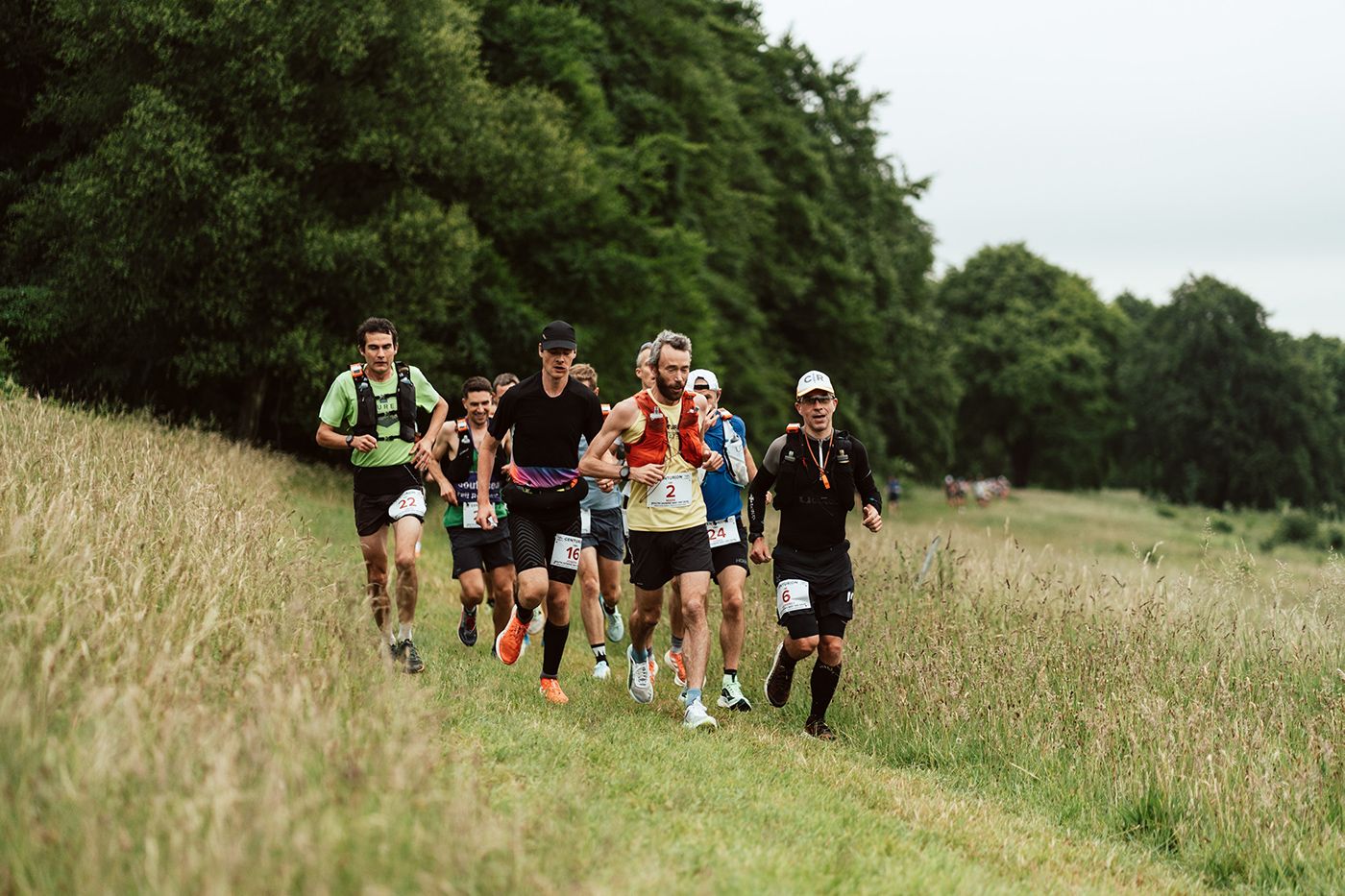
You might know that starting with the front pack is a bad idea, but “just sitting in” for a bit feels fine. The trouble is, it’s rarely your pace. Being surrounded by runners moving smoothly makes it almost impossible to slow down unless you’re intentional.
Many runners start too quickly because they’re afraid of being “behind schedule.” But in a 100-miler, no one is behind schedule at mile 5. If anything, arriving at mile 5 too fast guarantees you’ll be behind schedule at mile 80.
If you're not pacing yourself, someone else is pacing you and they don’t care if you blow up.
2. What Happens When You Start Too Fast
You burn through glycogen far too quickly
Run slightly too fast early and you pull disproportionately from carbohydrate stores. Even with perfect fuelling, you can’t replace glycogen at the rate you burn it at higher intensity.
This is why blow-ups in the late miles feel like “running out of everything.”Because you are.
Muscle fibre damage starts earlier
Going faster loads the quads, calves, and connective tissues harder. The eccentric cost of every descent is higher, and the cumulative damage arrives sooner. You feel great early, but you’ve spent energy you will desperately need at mile 70.
Your core temperature creeps up
Even on cool days. Even at night. Running slightly too hard early elevates internal temperature, which increases metabolic cost and accelerates fatigue. Don’t get us started on humid days as well.
People think the sun is heating them up, but your work rate is the main thing impacting it (unless you are reading this sat in the Sahara desert). Slow down before you need to cool down.
3. How to Pace a 100-Miler Properly
Start ridiculously easy
If it feels easy, slow down.If it feels slow, keep slowing down.If you feel like you’re walking the dog, maybe a little too slow (depending on the dog).
A 100-mile pace should feel like a warm-up for the first 90 minutes. If you cannot chat freely, you're going too fast.
Walking early is not weakness, it’s pacing discipline. Early hiking keeps your heart rate down, preserves glycogen and can keep your core temperature from spiking.
Elite athletes hike early in 100-milers. You should too. It’s not about moving fast every mile of the race, but moving well over the entire race.
Know your “all-day effort”
You need to recognise the difference between truly easy and that deceptive middle zone that feels fine early but quietly drains you over a 100-miler. That subtly-too-hard effort is the real pacing trap. Smooth at mile 15, punishing at mile 75.
The only way to master this is to practise it. Spend 2-4 hours in training running at a pace you could hold indefinitely, paying attention to breathing, posture, stride, and how well you can absorb fuel. Learn the calm, unforced feeling of your “forever pace.”
Once you can identify it instinctively, you stop drifting too fast early and carry your best pacing tool with you on race day.
Use your nutrition as a pacing tool
If you can’t absorb carbs early, you’re going too hard. Your gut is one of your best pacing sensors. Fuel early, fuel often, and use any gut discomfort as a sign that effort is creeping up.
The digestive system is incredibly sensitive to changes in intensity. As effort rises, blood flow is redirected toward working muscles and away from the gut, making it harder to process fuel even when you’re eating the right things.
If gels suddenly feel heavy or fluids sit uncomfortably, don’t blame the product, check the pace. Easing off for just a few minutes can restore gut function and prevent a small issue becoming a full-blown energy crisis later in the race.
Think of the race in thirds
- Miles 0-33: patience
- Miles 34-66: discipline
- Miles 67-100: problem solving
If you feel good at mile 60, congratulations, your pacing is working.If you feel heroic at mile 20, pacing is not working.
Remember at mile 80, even when you get it spot on, it will feel tough and 20 miles is still a long way to go. Don’t get too excited, work one check point at a time and keep up the good practice that got you there in the first place.
Use heart rate (optionally) as a ceiling, not a target
HR can help prevent you drifting too high early, but never chase a specific number. Use it only to cap effort, especially on runnable terrain.
Remember that heart rate is influenced by temperature, adrenaline, caffeine, excitement, hydration, and even how well you slept, so treating it as a “target” rather than a ceiling can send you down the wrong path.
Early in a 100-miler, a slightly elevated HR doesn’t mean you’re unfit; it often just means you’re fresh or buzzing. Let it guide you away from pushing too hard, but always prioritise perceived effort and how sustainable your movement feels.
The best pacing decisions come from internal cues, with heart rate acting as a quiet safety net, not the main driver.
Just remember your perception of effort is impacted by all of the above as well…
4. What Well-Paced 100-Milers Look Like
A steady, disciplined first half with minimal pace drift
Strong 100-mile performances almost always start with remarkable restraint. The best runners keep their early pace incredibly stable. No surges, no chasing packs, no ego-driven spikes. Their splits across the first 40-60 miles look almost boring, which is exactly the point. Small variations in pace early prevent the large collapses seen in runners who push even slightly too hard.
“My fastest time and podium finish at Western States in 2024 was done with a more controlled start” remembers Hayden. “I was able to build into the race as it went and even took the lead at points in the race later on.”
A calm, uneventful mid-race defined by control, rhythm, and steady fuelling
In the middle third of the race, nothing dramatic should happen, no big highs, no major lows, no panic, no heroics. The strongest performers fuel consistently, keep effort stable, avoid unnecessary time in aid stations, and stay mentally neutral. This middle section isn’t about speed; it’s about maintaining a rhythm that preserves the legs for later.
A final 20-30 miles where they slow far less than everyone else
What separates great pacing from good pacing is the last quarter. Well-managed athletes still have enough muscular resilience, energy availability, and psychological stability to keep moving efficiently long after others have hit survival mode.
Hayden recalls “that year I felt stronger and finished stronger than I ever have before and had one of the strongest finishes in Western States race history.” The last section up to Roby Point in Auburn is a significant climb, so if you haven’t paced well you could lose a lot of time and places there.
The best paced runners may not speed up, but they lose far less time relative to the field, often overtaking dozens of runners simply by continuing to run at a steady, unforced effort.
In Summary
Pacing a 100-miler isn’t about running slowly. It’s about running sustainably.
Your job is to protect your energy, your muscles, your gut, and your pacing discipline long enough to still be functional when the race truly starts. Almost everyone goes out too fast, not because they're reckless, but because 100 miles tricks the brain into underestimating effort early.
Hayden’s last tip, for all ultra races, but especially the long stuff: “Running your own race is key, especially at the start of a 100 mile effort.”
Start easier than feels sensible, walk earlier than feels necessary, and don’t compete until the late miles. Master that, and you’ll be the one moving past everyone else when the day gets long and the race finally begins.